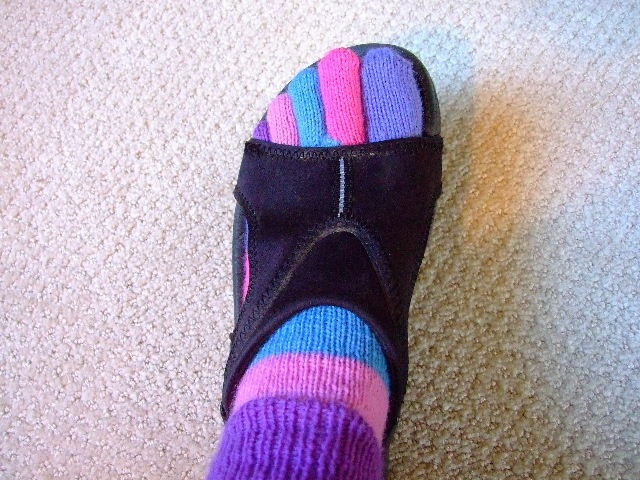
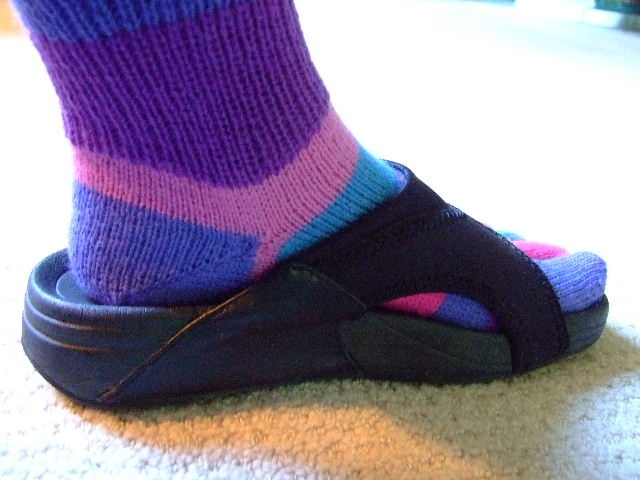
Today I’d like to share with you a sneek peek at my latest fun project. I call it the “Foot Glove.”
I started out with the intention of using one color for every toe to illustrate the contruction, but afterwards liked the results so much I decided to continue the stripes throughout the entire sock. This is definitely a great project for using up the sock yarn stash. All you have to remember is to divide each color in half (two balls, one for each sock) then knit away.
Presently, I am working on writing up the pattern and will have it in my ETSY store soon. This was a bit of an engineering challenge, as the toes are not simply attach in a straight line, but need to be comformed to the shape of the foot, but I soon figured it out and will be giving you step by step instructions in the pattern.
Of course, once you get past the toe section, you can let your imagination run wild with all your pretty colored yarns. The techniques I used in this Toe-Up pattern included jogless stripes, my no-wrap short row heel, “no-dots” rib color change, and an invisible bind off. All these techniques will be included in the pattern.
It has been great fun knitting this up. I hope you have fun knitting up your version, too.
In my last post I shared with you that I was working on a pair of socks for a friend. This lovely lady has a problem buying socks because she has extremely large ankles in comparison to her foot size, along with the fact that one ankle is 2 inches larger than the other. What to do? Hummmmm?????
First off, I couldn’t use my customary ” left/right toe cap” in the “More Toes” tutorial (click my “Tips and Tutorials” page) because of the large amount of increases I would need to accomodate the ankle measurement, so to solve that problem I opted for my “Slipper Toe Cap” pattern instead, using the width of the three middle toes for my provisional cast on ( see “Tips and Tutorials page). When my toe cap was completed I began increasing equally on each side till the entire toe area was complete.
With the toe section finished, I began a 2 x2 rib on the upper center instep section. The increases from that point on were made every fourth round, one stitch in from the beginning and ending of each side of my Magic Loop NA (needle A, first half of round) and NB (needle B, last half of round). My ultimate goal for a total stitch count was 1 inch less than the circumference measurement of the ankle.
My next task was to form a relatively narrow heel, while retaining the large number of stitches I needed for the ankle. To do this, I planned a 3 inch deep heel. Using half of the total stitches, in my case (52), I began my heel by working 18 sets of short rows, leaving 16 stitches, ( or 2 inches) in the center at the turn. Here is the result.
You can see the wide ankle stitches are in their proper place, evenly distributed to fit this special foot.
* Just a note on the placement of the heel. Even though her foot measured 10 inches from tip of big toe to back edge of heel, I finally got the proper fit when I planned the turn of the 3 inch heel at 8 1/2 inches from the tip of the big toe, otherwise it did not fit the heel as smoothly as I wanted it to fit.
If you will take a good look at a commercial sock, you will notice that the heel turn is NOT at the back edge of the heel, but forward of it.
Now, all I have left is a few more rounds, working stockinette only on the heel portion, then I will complete the sock with the 2×2 rib around the entire sock for about 5 inches.
The right foot will begin as for the left foot, except that the increases on the instep with be less, and will be spaced every 6th round.
The 3 inch heel construction will still be needed so I will have to borrow a few stitches from the instep in order to work the 18 short row sets for the heel, but that’s OK, it will fit, and that’s what is important.
Hope this helps those of you who might have these special feet.
Knit-tweaker
If you have any questions, feel free to contact me.
As I was working on my new design for a felted Chess Board, I decided to experiment on some tension issues. Being that the felted project did not require a perfect tension, I decided this was the perfect time to try to examine different way to hold the yarn. Now, up front, I will tell you that I have a hard time with my left hand as I am loosing the sensitivity I once had to control the yarn. In the past I have been able to maintain even tension in my knitting simply by making one wrap around my little figure. It worked for my single knitting, stranded knitting with both hands, and double knitting. Now, however, it isn’t working as well, and I knew I would have to come up with something more reliable.
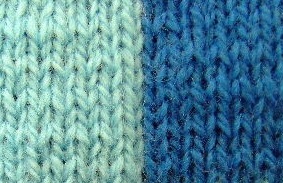
Below is a picture of what happened when I used my old system.
You can see the contrast between the tight and loose rows. This causes what I call, the “wave” affect. It is not very attractive, to say the least.
The second picture is the result of one extra wrap around the little figure of my left hand. The tension is more even, and I feel that I am heading in the right direction. Will it ever be perfect? Probably not. Ugh! But…. then, I’m not a machine.
Coming Soon!
Here is a picture of the large version of my felted/ fulled Chess Board
This board was knitted using Patton’s Classic Wool. It finishes to about 20 by 20.
The sample at the top with the two shades of blue will full /felt to about one inch squares, yielding a board that will be between 11-12 inches square.- perfect for small Chess sets.
The pattern will include a detailed chart, and instructions.
Here is a sample of the chart.
Check back if you are interested. I will be putting it on the shelf in my Etsy store soon.
While dinking around with a DK(double knitting) swatch, I finally worked out a “no twist” yarn edge closure that even I can do. Now, I will say right off that it is not a new discovery, for I am sure someone has done it. However, after reading and watching some of the offerings on this subject, I was a bit confused. So… I decided, that either my ears were plugged, or my brain wasn’t functioning on full tilt when I investigated the subject.
Now, that said, here is what I have to offer.
After you have your set up row in place. tie the CC(contrast color) on loosely.
Row 1. ONLY– Slip the first stitch of the DK pair knitwise. Bring both yarns to the front. Placing the MC (main color)yarn from the first knit stitch over the yarn(contrast color) of the purl. Lift the CC yarn, while holding the MC yarn firmly to the left. Purl the second Stitch of the DK pair with the CC. Bring both yarns to back. Continue across the row, working DK pairs till you have one DK pair left. Knit the first stitch of the pair with MC.
Drop the yarn behind your work (the green one).
Pick up purl yarn (CC)and bring it to the left, under the tip of the needle and to the front.
Purl the last st. Turn.
You can now see the captured yarn underneath the white bar.
Row 2– With yarn in back, slip the first stitch knitwise. Bring yarn to front and lay it over the needle to the right. Stick tip of right needle into purl st to left. See below.
Pick up yarn CC (contrast color)and purl the stitch. Move yarn(green) to back. Move MC(main color) to back. Now you are set up to work across DK pairs. Work all pairs to last pair. Knit first stitch of last pair, drop yarn in back as before. Pick up CC yarn, bring to left, underneath the needle, and forward. Purl the last stitch. Turn.
Row 3– Slip the first stitch knitwise, as before. Repeat the beginning and ending procedure as for Row 2 throughout your project. It works for me. Maybe it will work for you.
This make a nice slip stitch chain up the side, and secures the CC without any twisting or turning tricks.
OK, here’s the MORE part!
For the last few days I have been trying to figure out how to make a solid color band around a double knitted picture. However that required that I have the same color yarn on both sides of the bottom, top and side edges of my project. The bottom and top portions were no problem, as it only takes a separate strand of MC to be worked with the MC working yarn to produce the double sided solid frame of the same color. The problem was how to connect the picture portion using two different colors to the frame edge stitches. This method is also helpful if you don’t want all those different colors running down the trench between the two sides, causing extra unwanted bulk.
The problem was solved when I began to think, INTARSIA! I realized that I could combine any amount of colors if I began to handle them as an Intarsia pattern. The only difference is that I will be working both sides of the picture at the same time. So… here’s the fix!
Here’s another of the “more” tips-
Double Knit Tension Problems
Most of the tension problems with DK seem to center around the “purl” stitch being to loose on the backside. Practice definitely helps, but I’ve discovered that sometimes it take a bit of playing around with how your hold your yarn to tension it. For me, (since I purl with my left hand and knit with my right hand) that means double wrapping the yarn around the little finger on my left hand. This seems to keep my purl sitiches much firmer, and evens out my overall tension. You might give this a try if you find you are having the same problem.
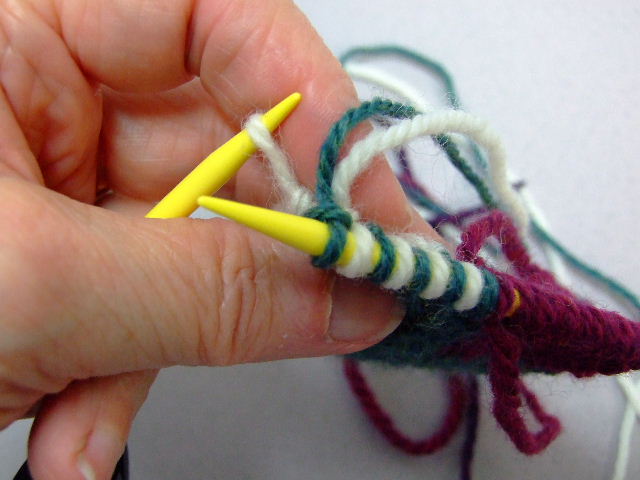
While starting my new Double Knitting project, I decided to try a new cast on method. In the picture below you will see my two color cast on. Each color was put on by itself, producing an alternating colored edge. I think it looks pretty cool.
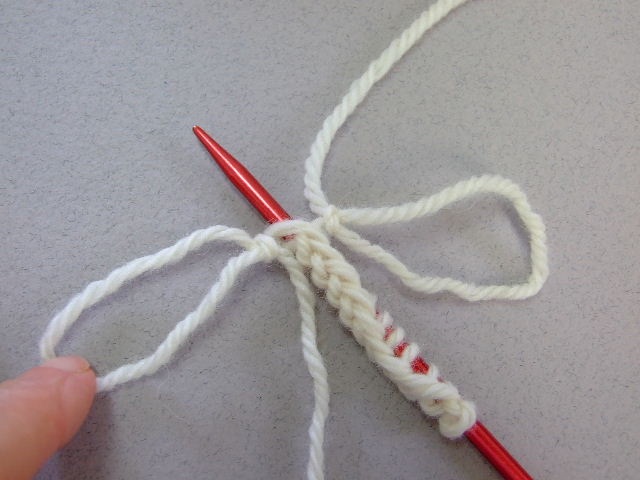
How to do it. Using the yarn and needles required for your project, calculate the yarn length for your long tail cast on by making a slip knot, then casting on 10 sts. Now tie a loop at the end of both pieces of yarn. See picture below.
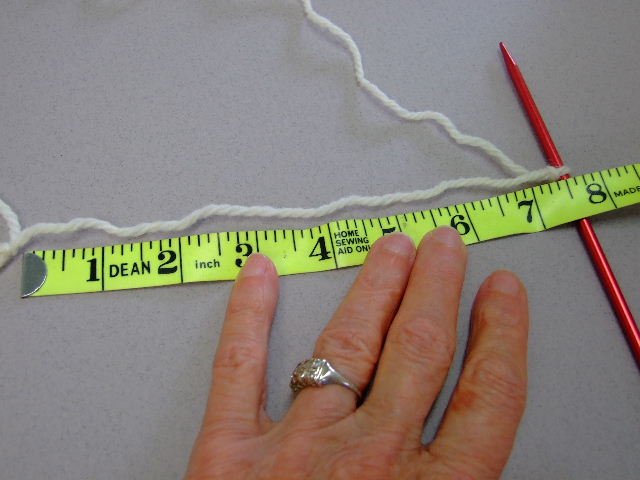
Carefully undo the 10 cast on sts, leaving the original slip st on needle. Now measure the ( A) long tail side.
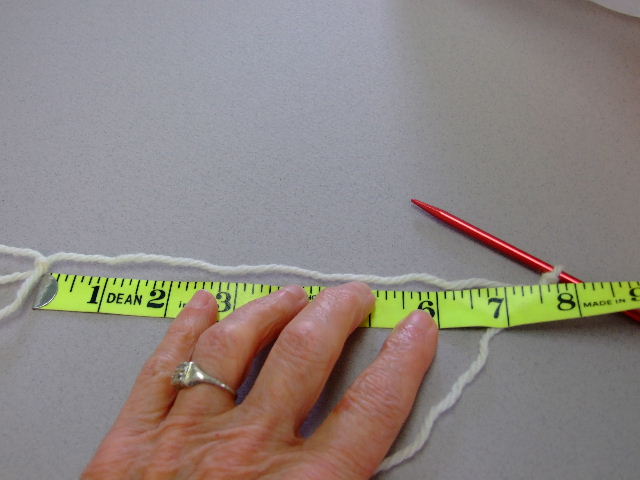
Then measure the ( B) working yarn side (the one attached to the ball of yarn).
Here you see that the length is about 7 1/2 inches, but I will round it up to 8 inches. Having determined how much yarn you need for 10 sts,you now can divide the number of cast on stitches required by 10 and multiply it times the length just measured, then add about 6 inches extra.
*You may notice that the measurements are about the same. But don’t be fooled. That is NOT always the case. It is important that you write down the numbers. On my current project, using size 10 1/2 needles, the B (working yarn) was about 1/3 more in length than the A (long tail).
Once you have determined the length of the long tail (A), peel off that length of yarn for one color then make a slip knot. STOP!!!! Before you go any farther, make a loose knot in A. You’ll thank me later.
Measuring again from the slip knot onward toward the ball of yarn, measure off the length of B. Break the yarn. Repeat this process with the other color, placing the slip knot infront of the first one. Now, with both slip knots on the needle, lay out your B’s (long tails, the one’s you marked- I hope) to your left, and the A’s straight ahead. Now you are ready to cast on.
In the video below, I will show you the move. Try it!
Once you are finisned casting your stitches on, just spit slice your working yarn on to the ends left and start knitting your double knit pattern.
You might also like to try this decorative cast on for a Fair Isle project.
Yes, my “Going to the Dog Socks” pattern is done and setting on the self of my Etsy store. The pattern includes, fitted right/left toe; a simple 2 by 2 rib on the instep; my short row neat and sweet heel, a double knit picture panel and the smooth finish of an invisible bind off.
Why the double knit picture panel? Double knitting is much more stretchy than Fair Isle knitting. There are no floats to deal with and you don’t have to worry about the tension getting too tight. And… besides, the best part is that there are no yarns to catch your toes on. So, just for your viewing pleasure I have started a Video Tips page that includes a short clip on my way of double knitting. There are lots of instructions on the web and YouTube. Don’t be afraid to try it.
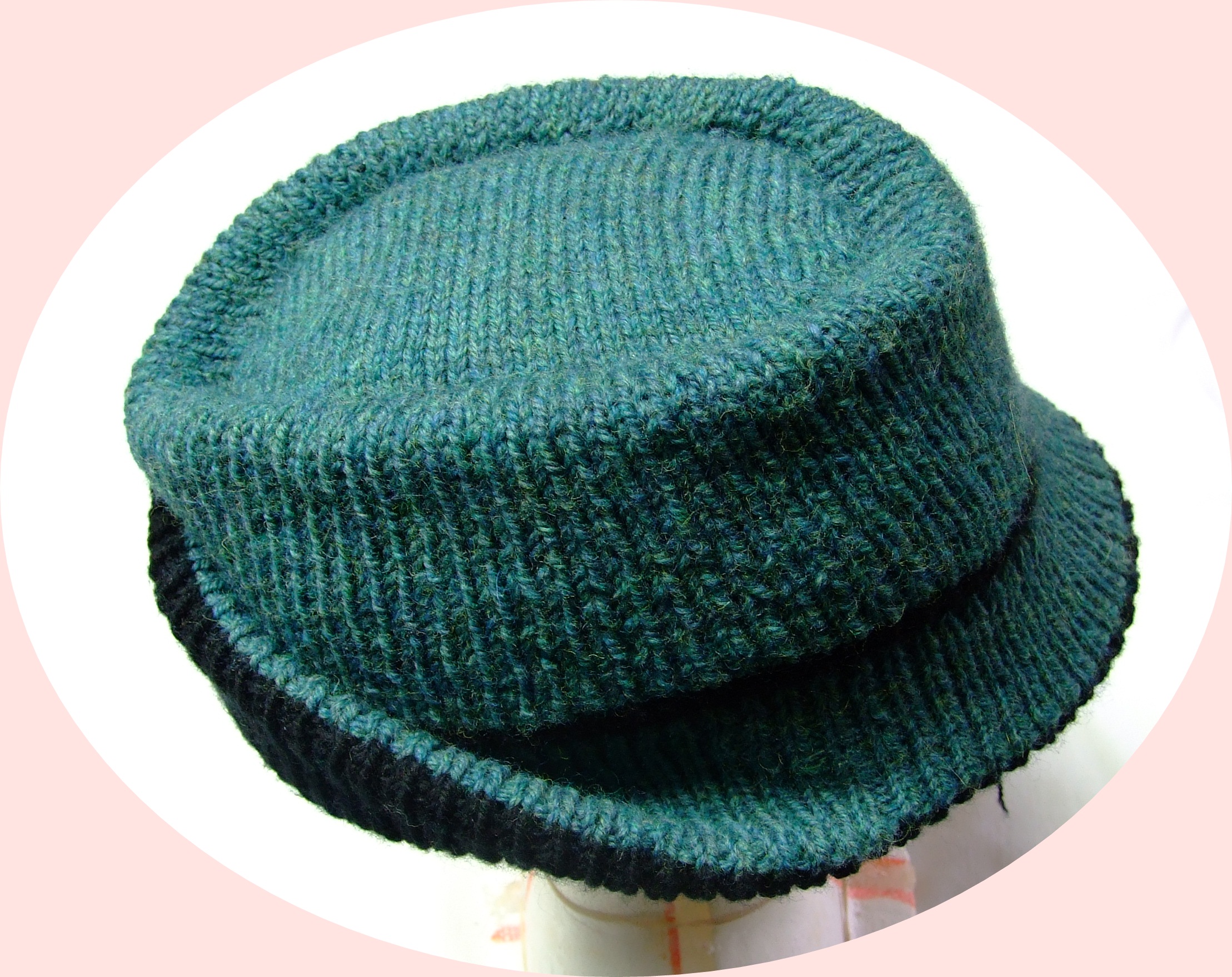
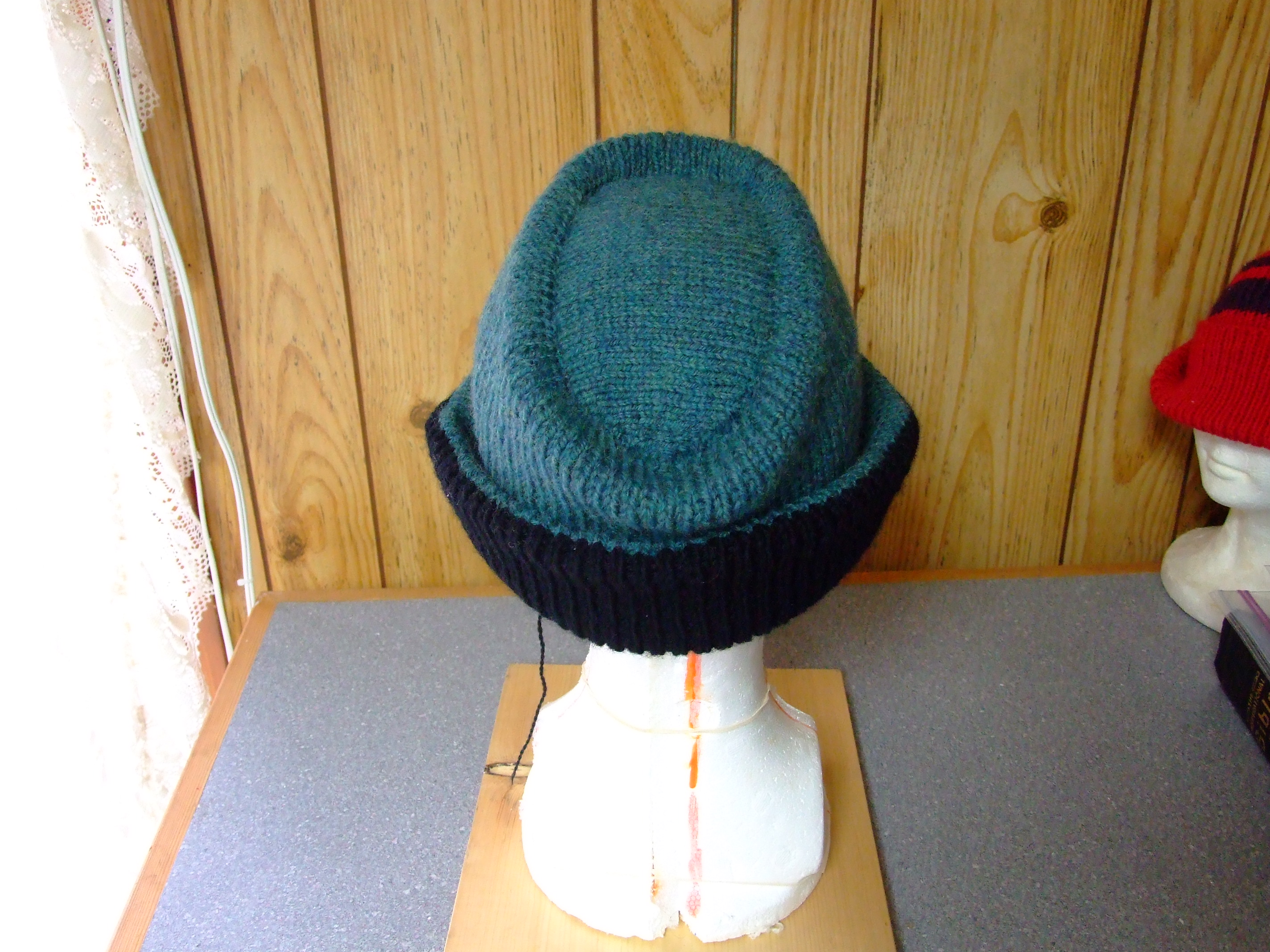
As promised, I have finally finish the pattern for the recessed crown version of my Tyrolean Hat. It has been fun. What I like about making this hat the most is that it offers several techniques to keep you from being bored. And… I get bored easily.
First,The crown of this very warm winter hat is formed with short rows, working one side of the oval at a time. Next, you will be working in the round, as you set up the rib pattern that is used throughout the hat. Thirdly, you will have the opportunity to work a short row shaping to form the extended brim in the back of the hat. All that, and then you get to do some needle gymnastics to join the brim sections together before you knit the inside cap that is used to retain the crown shape and rise. All this makes it an interesting knit. I think it looks pretty cool, too!!!
Oh! I almost forgot. Another interesting aspect of this pattern is that it uses two kinds of yarn, 3 ply worsted wool and fingering yarn. The fingering yarn is used for the inside cap, which creates less bulk.
All the above versions offer many possibilities. I am sure you will come up with many of your own.You can find the PDF pattern for this hat on the Pattern Catalog page.
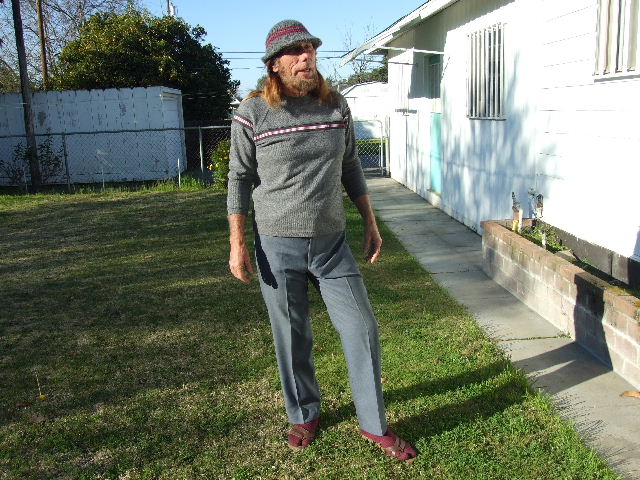
I know that I have been gone a long time, but, my time has not been wasted. I was fortunate enough to spend time with my creative brother, who has come to love knitting. Our time together was very productive. We developed shortcuts, a bag of “fix it” tricks for knitter’s, a pattern for Tabi socks and lastly 2 new hat patterns. And, to top it off, we fingered out a way to alter a cheap Styrofoam Wig head to replicate our individual head measurements. So without further ado, here’s my brother Wayne, sporting his new look.
Here are some pics of his Mock Tyrolean Hat-
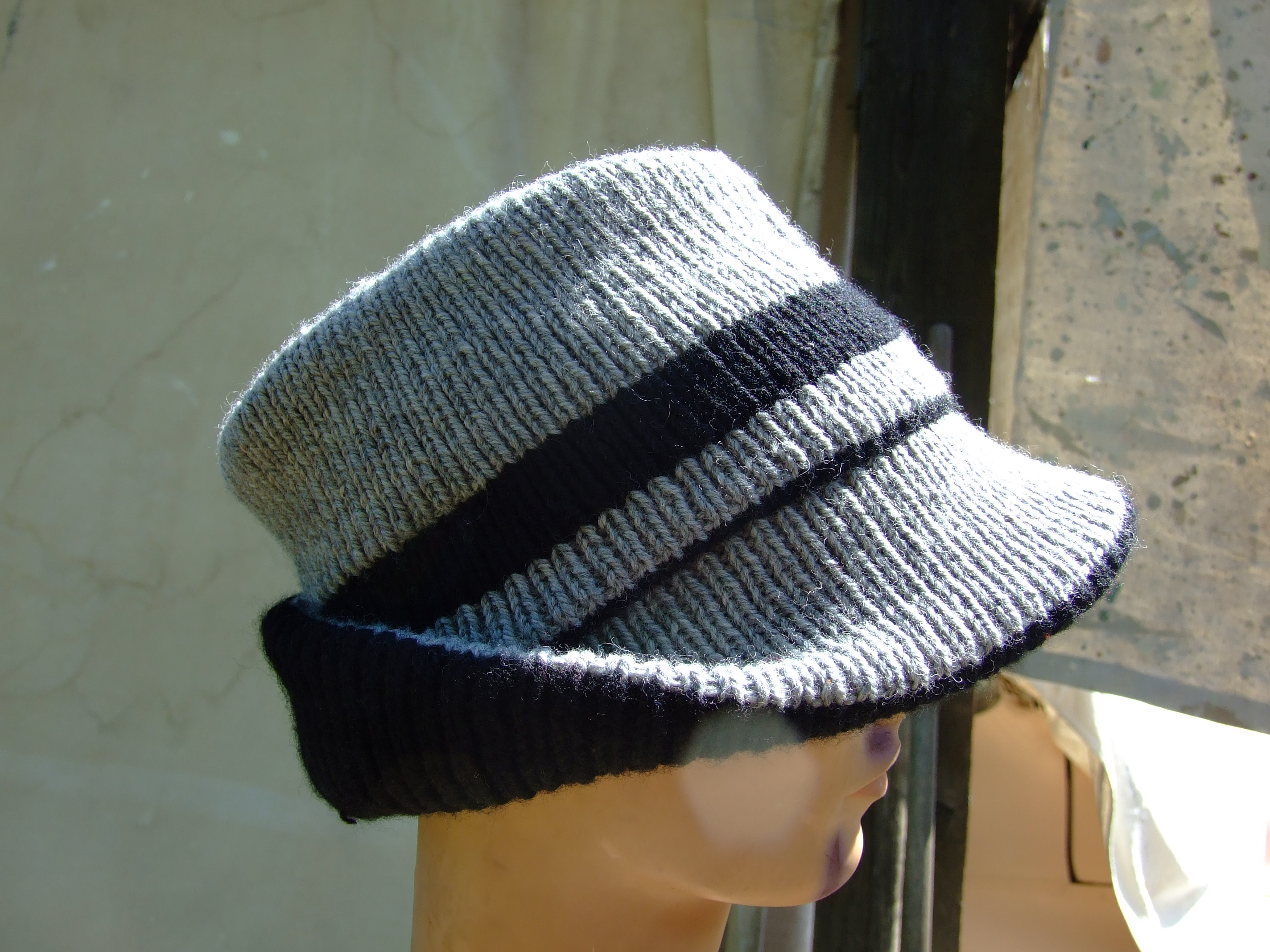
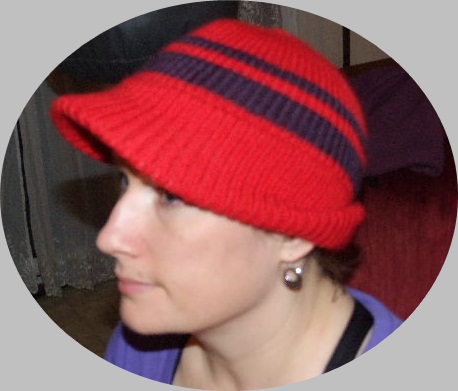
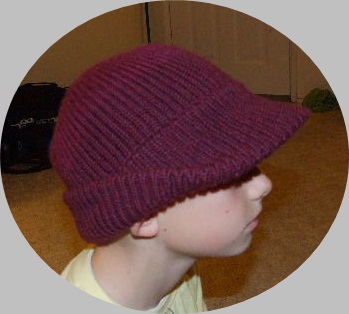
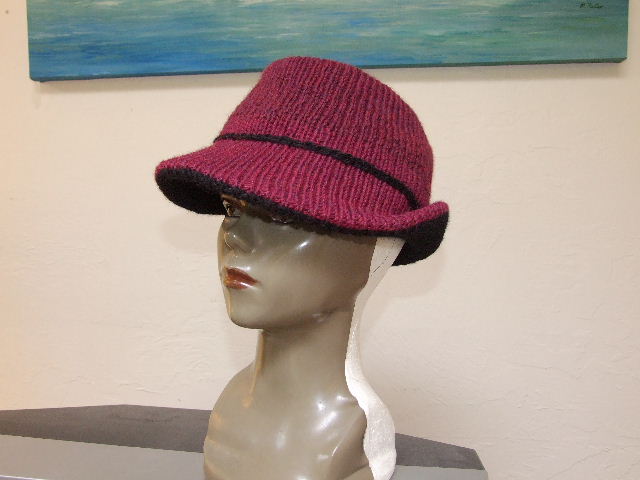
This ribbed hat pattern, knit from the bottom up, includes three versions, all with visors, and 2 crown designs, and, unlike a lot of hat patterns, this one is not a beannie.
Here is my version, with the flatter crown.
My grandson says this will make a perfect hunting hat, as the back folds down to cover his ears and neck. ” I want one in Camo.”
Even though most us today store our treasured photos on CD’s, there is still nothing like sitting down with the old album and flipping through the family photos and tin types. With that in mind, I designed a knitted cover for my daughter’s family album. It was personalized with her initials, and created in her color scheme. Now, image your initials and color scheme- from there the possiblities are endless.
I just finished it, and thought I would give you a sneak peak. I will be offering the pattern sometime in December at my Etsy shop.
For a small additional fee, I will be happy to chart your letters for you. * I have created these initials with Cable Chains, but you can also do them with a crochet hook.
This pattern is designed to fit over a 12 by 12 post bound album. Actually measurements are 12 3/4 by 13 1/2 inches.
This photo cover was knitted with Palette yarns from Knit Picks. It’s construction incorporates Intarsia, and Cable Chains (which are demonstrated in my free tutorial offered on this site).
Below is a peak at the center detail-
The back construction that holds it in place, provides an extra pocket for pictures that can be placed later.
You can construct the photo album yourself, pad it up, then knit the cover, and you have created an heirloom for your family to share for years.
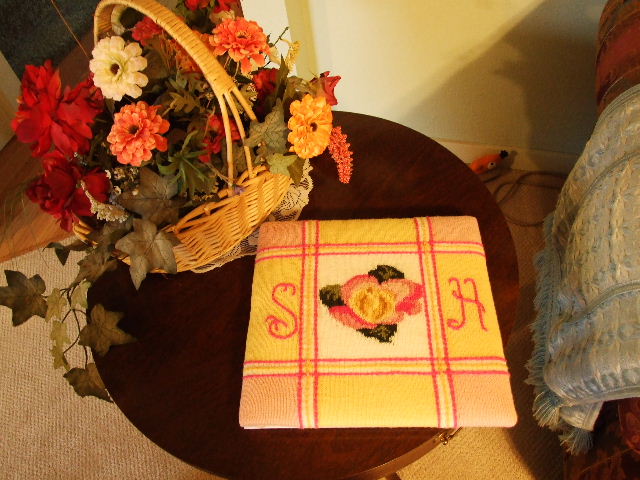
I have just completed my first two Needlepoint Knitting pillow designs. Tropicana Rose is available as a PDF download on my new page, entitled ” Free Pattern Catalogue.”
Tropicana Rose Pillow
This pattern offers the experienced knitter a few challenges, yet provides great fun at the same time-at least it did for me.
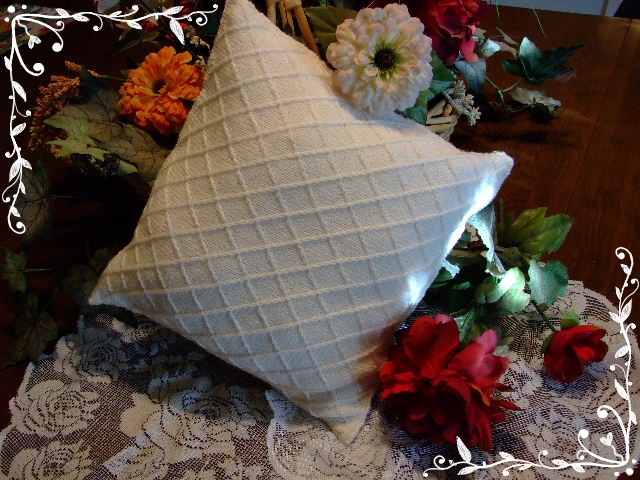
In the photo above you get a peak at the back of the pillow, without the fringe. This is just one of the options of this design.
Here it is fresh off the needles.
Just click on “The Design Gallery” at the top of the page.
Thanks so much for making your method of slipped short row heels available. It looks so nice and neat on the inside and outside plus NO HOLES . I have never been happy with the wrapped or yarn over short row heel on my socks. Your method is just so amazingly easy. I’ll be using this on all my heels and toes from now on. I recommend this for anyone who doesn’t like picking up stitches for a heel flap or holes in their short rows.
And I might add that I will be trying her newest tweak on the heels and toes of my next socks."
Deb


















 Creative Knitting - Beyond Knit and Purl